 Login »
Most of the world's telephone system has been digital for well over 20 years. The first use of digital switching for live telephone traffic was in 1968, with a prototype exchange called Empress in London. Production digital systems developed through the 1970s, the most widespread being Ericsson's AXE system, on which most of the world's mobile phone networks are based.
The digital systems we've looked at so far use circuit switching: a dedicated end-to-end path (a circuit) is set up for each call, and that call has exclusive use of it the whole time. But statistics show most calls consist of more silence than sound, so a lot of network capacity is wasted transmitting zeros. Circuit switching is very good for high-quality sound, but for most calls we can trade some quality for efficiency.
We've also seen that digital circuit switching limits data transmission to 64kbit/s — hardly suitable for modern internet browsing — and the only way to go faster is to use several circuits in parallel. ISDN does this: 30 simultaneous calls gives 2Mbit/s, but it's not very practical.
As explained in more detail in the Packet Switching section, computer data networks like the internet use packet switching to transport high-speed data efficiently — one circuit between two points can carry data from many different users, regardless of how much data or speed each needs.
With voice traffic already digital, it too can be placed in a packet and sent over a packet-switched network. A server called a softswitch interprets phone numbers and instructs the Media Gateway where to send the packets.
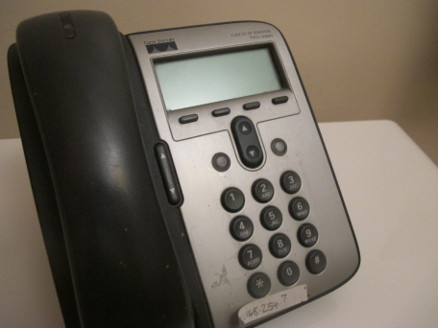
The Media Gateway's job is to put the digital bits representing voice into packets and send them onto the packet-switched network (and do the reverse for incoming packets). A Media Gateway might sit in a telephone exchange building handling multiple lines, or be built into the phone itself — the phone could even be software running on a PC, like Skype. When the packet-switched network is based on the Internet Protocol (IP), it's called Voice over IP (VoIP) — though this doesn't always mean calls over the public Internet; the IP network might be a private one run by a phone company or inside an office building.
Open standard protocols from the International Telecommunications Union (ITU) and Internet Engineering Task Force (IETF) let software and hardware from different providers interoperate — including SIP (the Session Initiation Protocol, from the IETF), H.323 (an older ITU alternative), and MGCP (the Media Gateway Control Protocol).
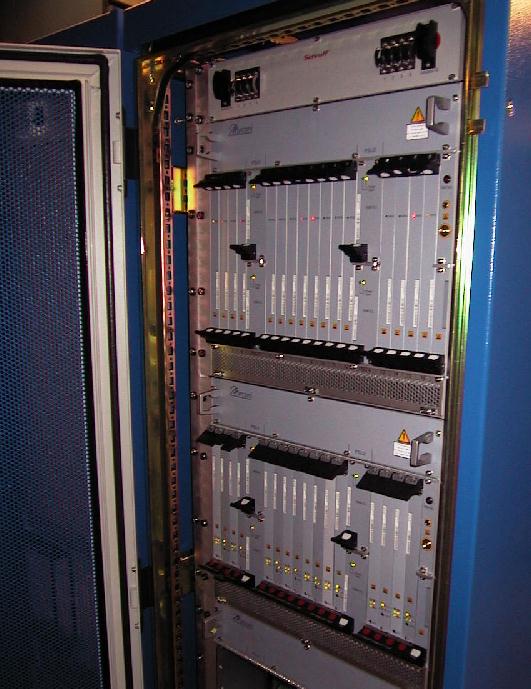
Softswitches may run as software on standard PC server hardware, or, for public phone networks, on specialist server hardware evolved from the common-control systems of digital circuit-switch exchanges — designed for very high reliability.